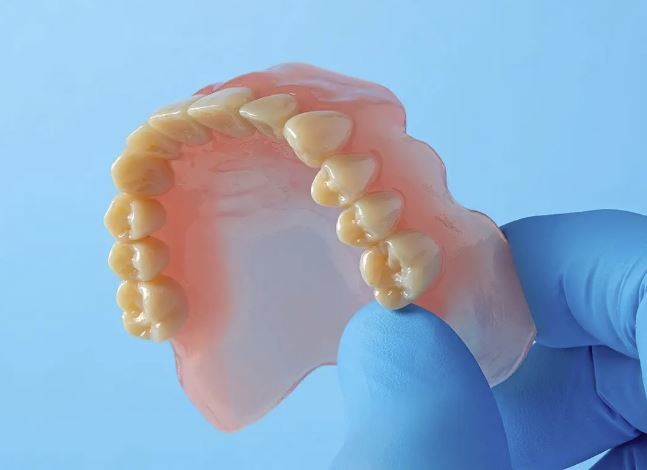
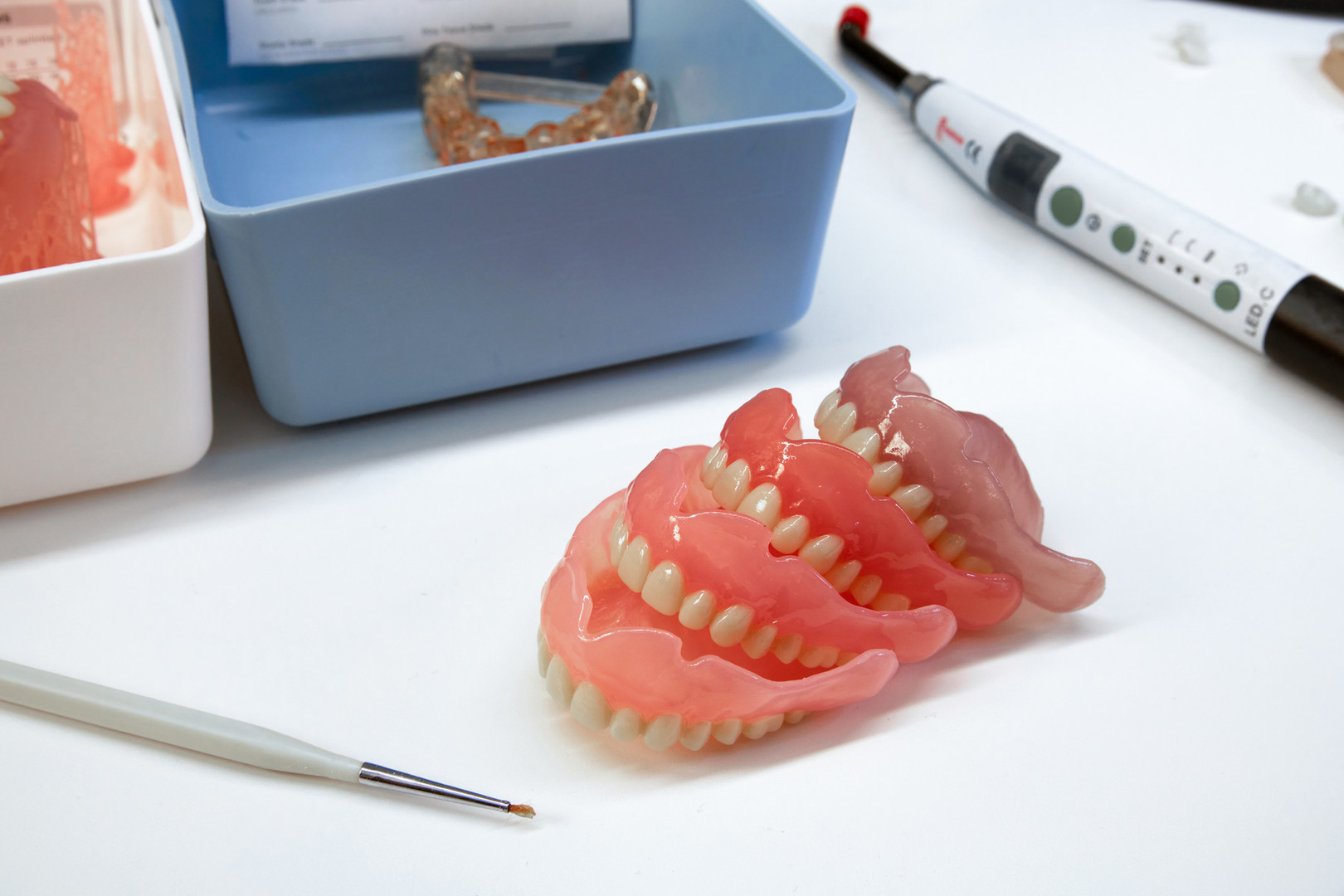
Digital fabrication of complete and partial dentures
Digital Denture Fabrication – Modern Prosthetics for Everyday Clinical Practice
Digital technology has significantly transformed the field of removable prosthetics. Traditional manual fabrication of complete dentures is increasingly being replaced by a fully digital workflow.
Digital denture fabrication is suitable for both complete and partial removable solutions, whether temporary, replacement, or long-term prosthetic rehabilitations. Whether the laboratory uses 3D printers or CAD/CAM milling systems, digital prosthetics offer consistency, quality, and efficiency that are difficult to achieve with manual techniques.
Materials for 3D Printing of Complete and Partial Dentures
Formlabs, one of the leading manufacturers of desktop 3D printers, enables precise and reliable fabrication of temporary or permanent dentures using biocompatible resins such as Denture Base Resin and Premium Teeth Resin.
The process includes:
- Digital impression capture (intraoral or laboratory scan)
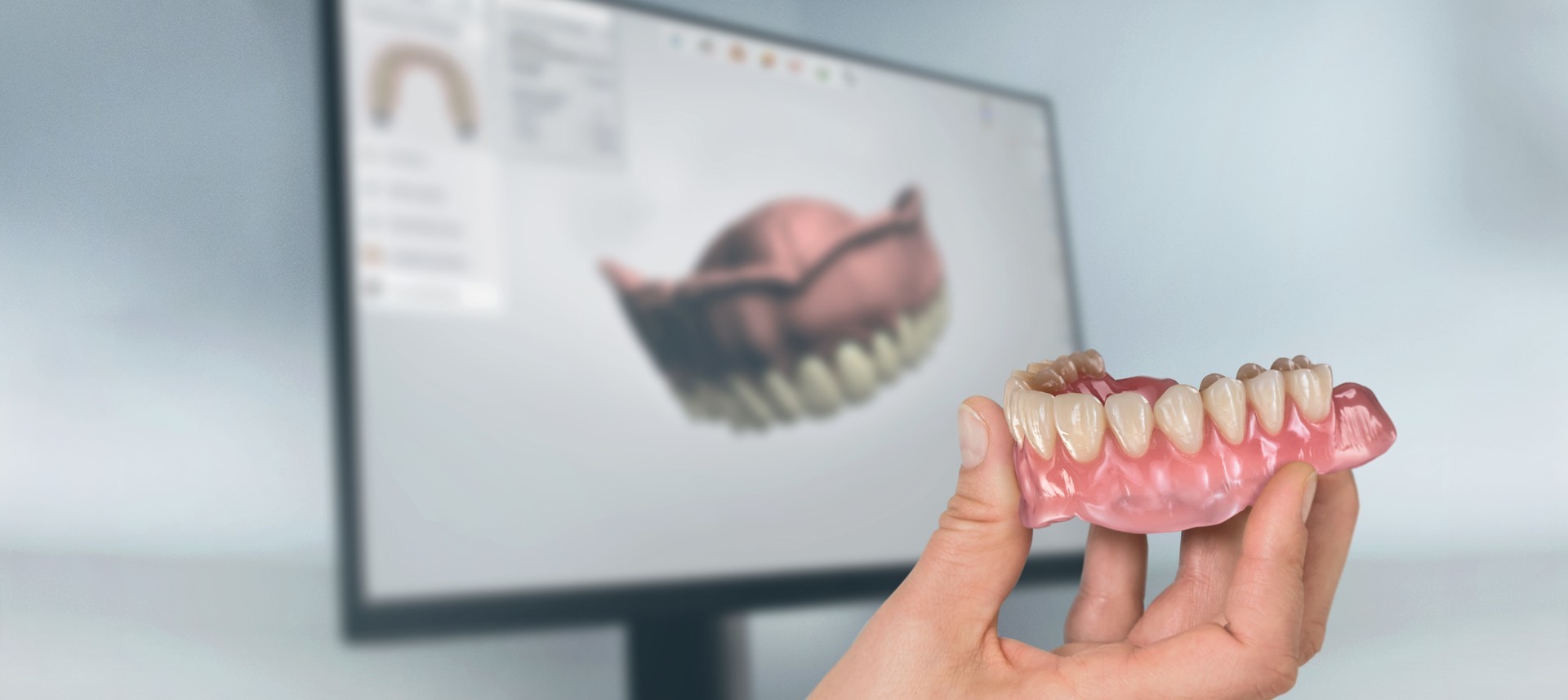
- Digital design of the denture base and tooth setup in CAD software (e.g., Exocad)
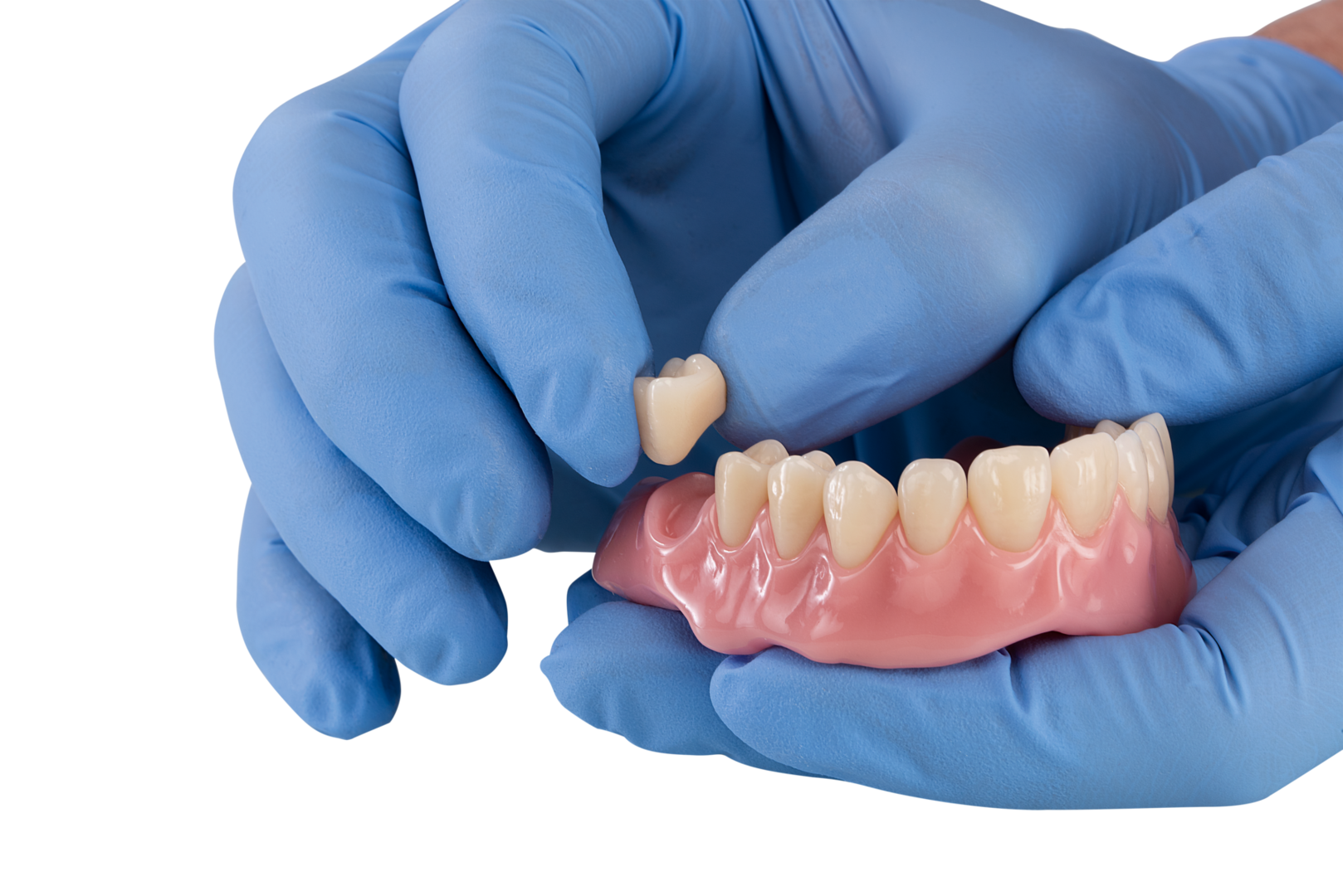
- Separate printing of the base and teeth
- Manual assembly and final polishing
Advantages:
- Fast production (a complete denture can be made in a single day)
- High accuracy and repeatability
- Lower material and production costs
- Time-saving workflow
- Digital records can be archived for quick remakes
For 3D printing, we recommend the Form 4B 3D printer.
For the fabrication of denture bases, we use Denture Base Resin or VITA Vionic Dent Resin.
For the fabrication of teeth for dentures, we use Premium Teeth Resin.
Users of Formlabs previous-generation model Form 3B+:
Denture bases are 3D printed with Denture Base Resin.
Teeth for full dentures are 3D printed with Premium Teeth Resin.
More biocompatible resins for Form 3B+.
Materials for CAD/CAM Fabrication of Complete and Partial Dentures
The VITA VIONIC system offers a comprehensive CAD/CAM solution for highly aesthetic complete dentures, specifically designed for dental laboratories that demand stability, durability, and uncompromising material performance.
The process includes:
- Digital design in dental software (e.g., Exocad) using VITA VIONIC VIGO tooth libraries.
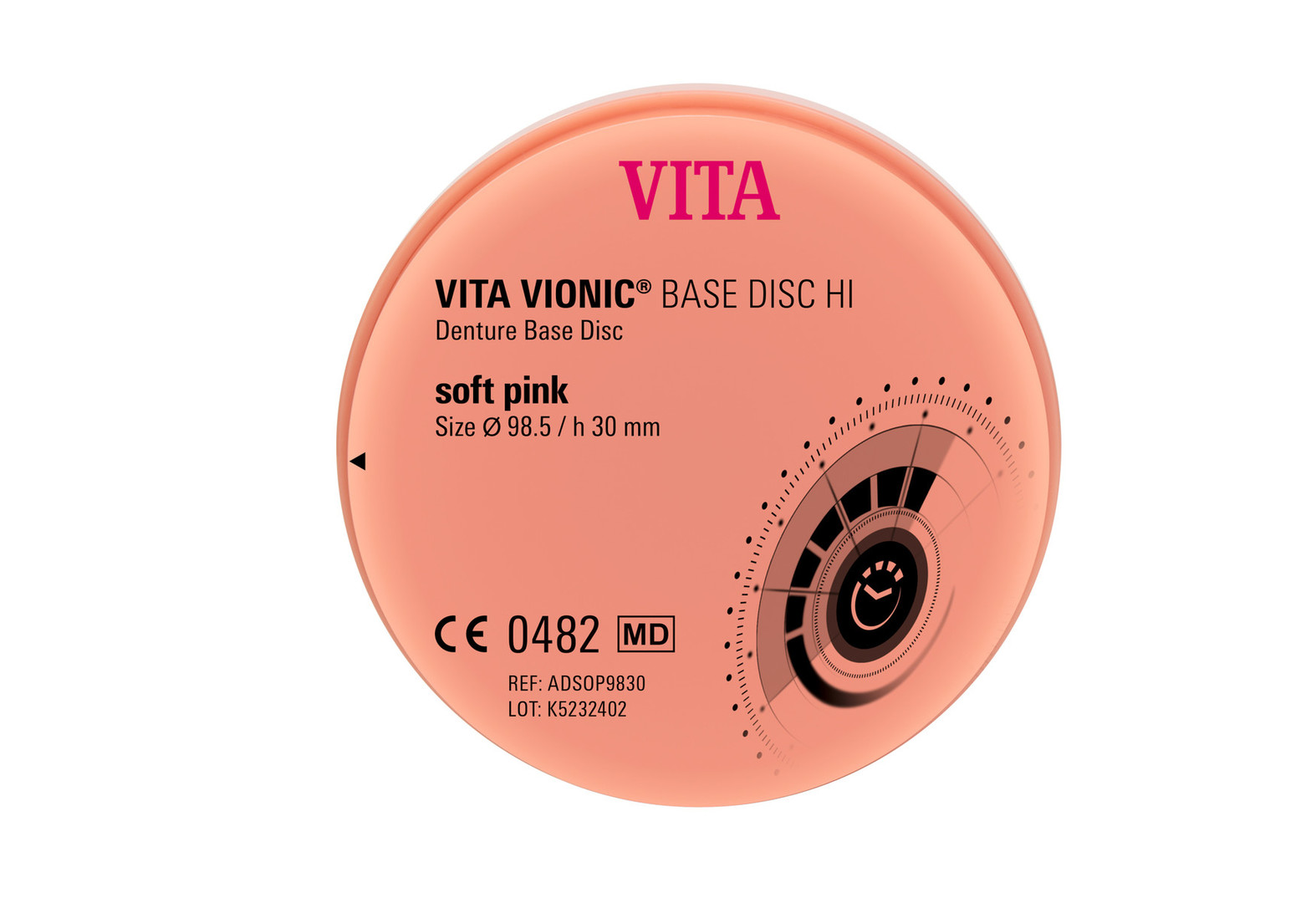
- Milling of the denture base from Vita Vionic Base.
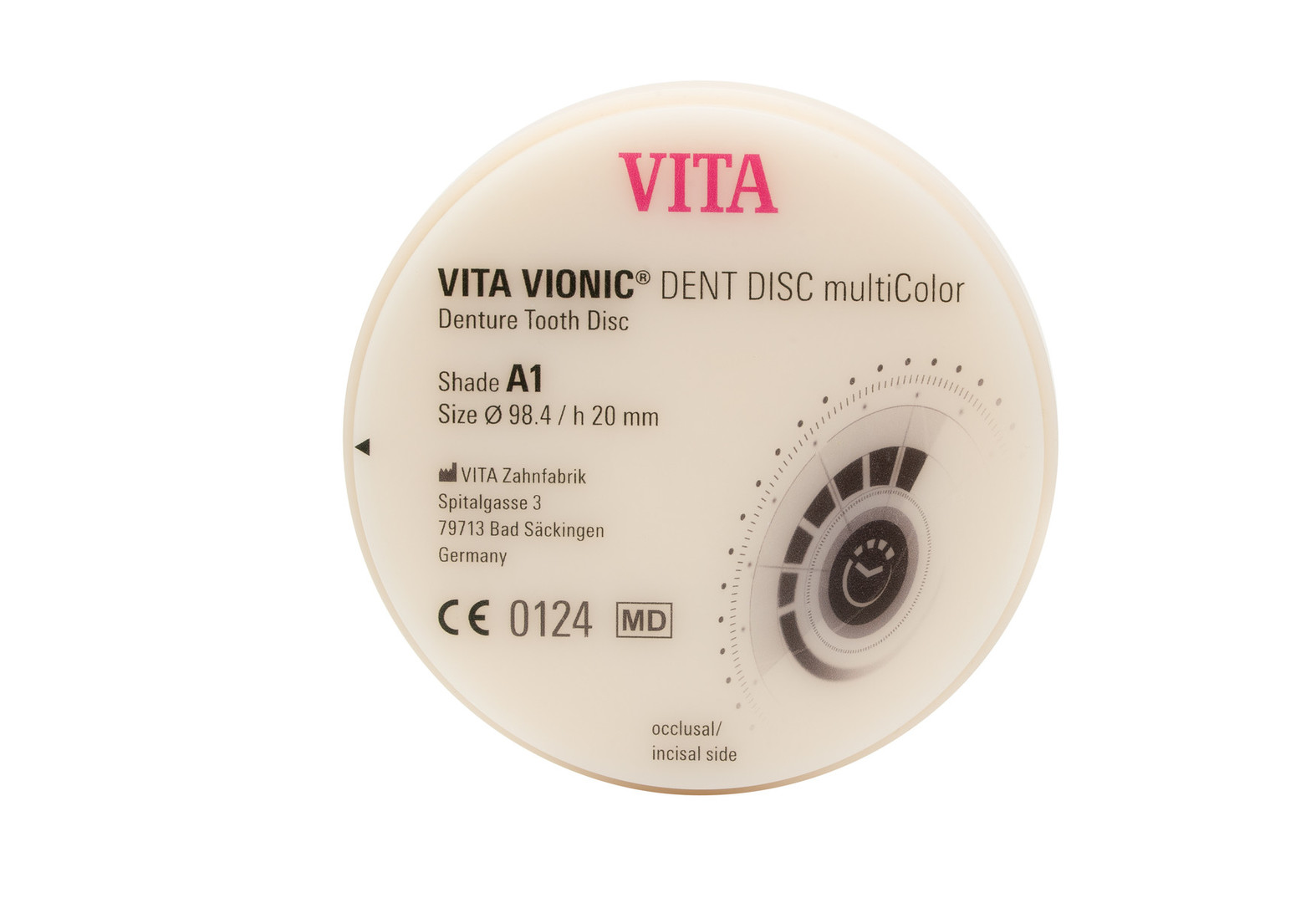
- Milling of an individualized tooth setup from pre-colored PMMA discs or use of Vita Vionic Vigo prefabricated teeth.
- Precise positioning and secure fixation of the teeth within the base using Vita Vionic Bond.
Advantages:
- Outstanding mechanical stability and long-term durability.
- No need for manual modeling.
- Reliable process reproducibility without deviations.
- High aesthetic value thanks to anatomical shapes and the natural color gradient of VITA VIONIC VIGO teeth.
Pre-shaded PMMA disc for denture base fabrication. Enables efficient base production through CAD/CAM processing without manual flasking or shaping, allowing for easy and consistent reproduction.
High-quality composite material made from polymethyl methacrylate (PMMA), designed for milling teeth for complete or partial dentures.
VITA VIONIC VIGO is a new generation of teeth made from SE polymer composite, featuring advanced design specifically tailored for digital denture fabrication.
The choice between 3D printing and CAD/CAM milling often depends on the desired speed, durability, and aesthetic requirements of the final restoration. Formlabs 3D printing offers fast and cost-effective production, making it ideal for temporary or more affordable solutions. On the other hand, the VITA VIONIC CAD/CAM approach delivers premium results for long-term use and aesthetically demanding patients.
Together, these technologies represent the future of fully digital prosthetics — with a focus on individualization, repeatability, and aesthetic perfection.
Share news